Sadness Icons for Creative and Practical Use
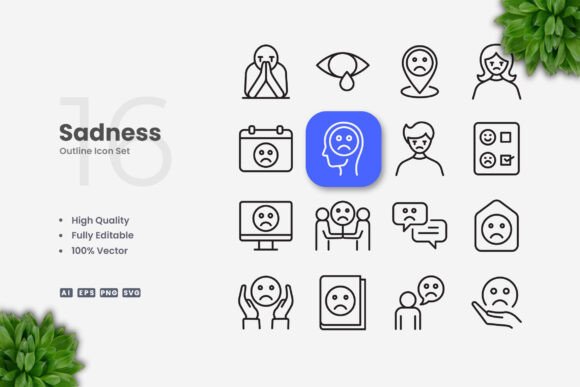
In the world of design, icons serve as visual shorthand, conveying complex emotions and ideas with simplicity. Among these, sadness icons hold a unique place, offering a subtle yet powerful way to communicate feelings of loss, melancholy, or reflection. Whether used in digital interfaces, print materials, or social media content, these icons can enhance the emotional tone of any project. With their clean and minimalist style, they are ideal for a wide range of applications, from mobile apps to infographics and beyond.
Designed with a focus on clarity and versatility, sadness icons are crafted using vector graphics, ensuring they remain sharp at any size. This makes them perfect for use across different platforms and formats. Their high-quality design allows for seamless integration into various projects, while the ability to customize stroke weight, color, and size gives creators full control over how these icons are presented.
Key Features of Sadness Icons
The features of sadness icons make them a valuable resource for designers and developers alike. Each icon is 100% vector-based, meaning it can be scaled without losing quality. This is especially important when working on projects that require different resolutions, such as web banners, mobile app screens, or printed materials. The customizable nature of these icons allows users to adjust colors, stroke thickness, and other details to match their specific needs.
Additionally, the availability of multiple file formats ensures compatibility with a variety of design tools. Source files in Adobe Illustrator (AI) format provide full editing capabilities, while EPS Version 10 files offer a reliable option for professional printing. SVG files are ideal for web use, and PNG files with transparent backgrounds allow for easy integration into digital designs. A Readme.txt file accompanies the download, providing helpful instructions and additional information about the icons.
One of the most appealing aspects of these icons is their ease of use. They support drag-and-drop functionality, making it simple to incorporate them into existing projects. Whether you're working on a website, a mobile application, or a marketing campaign, the straightforward workflow ensures that these icons can be used efficiently without requiring advanced technical skills.
Applications of Sadness Icons
Sadness icons find use in a wide range of creative and practical contexts. In the realm of digital design, they can be used to enhance user interfaces by adding visual cues that reflect emotional states. For example, a mobile app that focuses on mental health might use these icons to help users express their current mood or track their emotional well-being. Similarly, websites that aim to create a reflective or contemplative atmosphere could benefit from incorporating these icons to reinforce the overall tone.
In print media, sadness icons can be used in brochures, flyers, and posters to convey messages of empathy or awareness. They are particularly useful in campaigns related to mental health, grief, or personal development, where visual elements can help communicate complex ideas in a more accessible way. When used in infographics, these icons can help illustrate data or statistics related to emotional well-being, making the information more engaging and relatable.
Social media platforms also benefit from the use of sadness icons. Content creators can use them to add depth to their posts, helping to express emotions that may be difficult to convey through text alone. Whether it's a post about overcoming challenges, a message of support, or a reminder of shared human experiences, these icons can enhance the impact of the message. Their clean and simple design ensures they are visually appealing without being overwhelming.
Benefits of Using Sadness Icons
One of the main advantages of using sadness icons is their ability to communicate emotions effectively without the need for words. This makes them particularly useful in multilingual environments or when targeting audiences with varying levels of literacy. By relying on visual cues, these icons can bridge language barriers and ensure that the intended message is understood by a broader audience.
Another benefit is their adaptability. Because they are designed with a minimalistic approach, they can be easily integrated into different design styles. Whether the overall aesthetic is modern, traditional, or abstract, these icons can be adjusted to fit seamlessly. This flexibility makes them a versatile tool for designers who want to maintain consistency across different projects or platforms.
From a technical standpoint, the availability of editable stroke options adds another layer of customization. Users can adjust the thickness of the lines to match the visual hierarchy of their design, ensuring that the icons are both functional and aesthetically pleasing. This level of control is especially important in projects where precision and attention to detail are critical.
Considerations for Using Sadness Icons
While sadness icons offer many benefits, it's important to consider their appropriate use. In some contexts, the emotional weight of these icons may be too strong, potentially affecting the user experience. Designers should carefully evaluate whether the use of these icons aligns with the overall purpose of their project and the message they wish to convey.
Additionally, it's essential to ensure that the icons are used in a way that respects the subject matter. While they can be powerful tools for communication, they should not be used inappropriately or in ways that could be seen as insensitive. Thoughtful consideration of the context and audience is key to using these icons effectively and responsibly.
Finally, when working with these icons, it's important to take advantage of the available resources. The Readme.txt file provides useful guidance, and the various file formats ensure that the icons can be used in a wide range of applications. By understanding the capabilities and limitations of these icons, users can make the most of their potential and create more meaningful and impactful designs.